
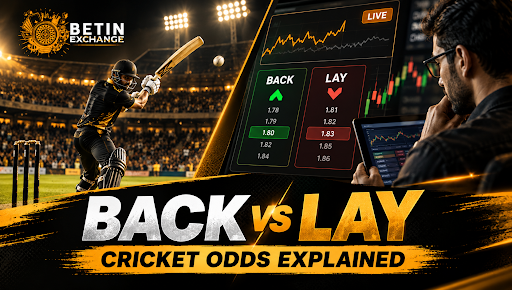
A daily ₹2,000 target may sound like a clear plan, but cricket odds do not produce a fixed income. A match can move quickly, a bet can lose, and no back-and-lay method guarantees a particular return. Treat the figure in this title as an example, not a promise. Before placing a bet, understand how the two sides of an exchange work, calculate the amount at risk and decide what loss you can afford.
Betinexchange’s website describes sports betting on cricket and other sports alongside live casino games. It also promotes account access and deposits and withdrawals. The page does not explain its specific back-and-lay rules, commission or market terms, so check the terms shown on the platform before placing any bet. Availability, account requirements and applicable laws may vary by location.
What “back” and “lay” mean
A back bet is a wager that an outcome will happen. For example, you back a batter to score above a listed total, or a team to win. If your selection succeeds, the market pays according to the odds; if it fails, you lose your stake.
A lay bet takes the other side: you wager that a selection will not happen. In an exchange, a lay bet has a liability, the amount you may lose if the selection wins. This is different from the lay stake.
Use these basic calculations before considering a bet:
- Back profit if it wins: stake × (odds − 1)
- Lay liability: lay stake × (odds − 1)
At decimal odds of 2.00, a ₹100 back stake could return ₹200 in total: ₹100 stake plus ₹100 profit, before any commission. A ₹100 lay stake at the same odds carries ₹100 liability. If the selection wins, the layer loses that liability; if it loses, the layer wins the opposing stake, subject to the exchange’s rules and charges.
How a back-and-lay trade works
Some traders back a selection at higher odds and later lay it at lower odds. If the market moves in their favour and both bets are matched, the second bet may reduce exposure or lock in a small profit. Others lay first and back later if odds move in the direction they expect. The outcome depends on the market, timing, available prices, matched amounts and fees.
Here is a simplified example. You back a selection for ₹100 at odds of 2.20. The potential profit is ₹120, excluding the returned stake. Later, the odds shorten to 1.80. To balance the result across either outcome, the approximate lay stake is:
Back stake × back odds ÷ lay odds
In this example: ₹100 × 2.20 ÷ 1.80 = ₹122.22. Before commission and rounding, that would leave roughly ₹22.22 whichever way the selection settles, if the full lay amount is matched at 1.80. If the odds drift instead, the trade may show a loss. If only part of the lay bet matches, your position is not fully balanced.
This calculation illustrates exposure; it does not predict the market or make a profitable trade likely. Commission, minimum stakes, price movement and platform-specific settlement rules can change the final result. Check the figures using the exchange’s own display before confirming.
Why cricket markets can move quickly
Cricket odds respond to events and expectations: wickets, boundaries, required run rate, overs remaining, weather interruptions and team announcements. In-play prices may change between the time you view them and the time a bet is accepted. A price that looks favourable can disappear, and an unmatched bet does not guarantee an exit.
Liquidity also matters. A market with fewer available participants may not have enough opposing money at the price you want. You may need to accept a different price, reduce the stake or leave the bet unmatched. Do not assume that every position can be closed instantly.
A measured way to approach a trade
Before taking a position, write down what movement you expect and what would prove that expectation wrong. Work out the maximum liability first, not the hoped-for profit. Decide in advance whether you will exit, hedge or let the market settle, and remember that each choice has risk.
Keep a simple record of the market, odds, stake, liability, reason for the trade, result and any commission. Review the record over time rather than judging a method from one match. Never increase a stake just to recover a loss or reach a daily target. A target such as ₹2,000 does not change the odds, improve a selection or ensure there will be a suitable opportunity every day.
Common mistakes to avoid
A common mistake is treating the back stake as the total risk on both sides. Lay liability rises with the odds, so calculate it before entering. A trade only balances as intended when the required amount is matched; a partial match leaves some exposure behind.
Odds can also move sharply after a wicket or boundary. Reacting late may mean accepting a worse price. Avoid betting simply because a match is live or a previous trade lost. If the market has moved beyond your planned entry or exit, reassess rather than forcing a position.
A quick check before placing anything
Confirm the exact market and settlement conditions, including what happens if a match is shortened, tied or abandoned. Check whether the odds are decimal and whether the amount shown is your back stake or lay stake. Calculate potential return and worst-case liability, account for commission, and verify the amount matched. If any detail is unclear, wait until you understand it.
A ₹2,000 daily figure should never determine your stake. Results and opportunities cannot be controlled. Set a loss limit instead, and be prepared to finish the day without a trade.
Set limits and protect your wellbeing
Only use money you can afford to lose, and set a time and spending limit before you begin. Do not borrow to bet, chase losses or trade while distressed or under pressure. If betting stops feeling recreational or starts affecting essential expenses, step away and seek support from a suitable local service. Do not gamble if you are under the legal age where you live.
Back-and-lay trading is a way of managing a position in a betting market, not a dependable income plan. Learn the settlement rules, confirm the full liability and understand the fees before making any decision. The most useful “formula” is careful arithmetic paired with strict limits—and accepting that sometimes the safest trade is no trade at all.
FAQs
Q. 1 What is the difference between a back bet and a lay bet?
A back bet supports an outcome happening. A lay bet takes the opposite side. For a lay bet, check the liability, which can be greater than the lay stake.
Q. 2 How do I calculate lay liability?
Lay liability equals the lay stake multiplied by decimal odds minus one. For example, a ₹100 lay stake at odds of 3.00 carries ₹200 liability before fees.
Q. 3 Can I earn ₹2,000 every day with back and lay trading?
No. Back and lay trading cannot guarantee daily income. Changing odds, unmatched bets, fees and losses can all affect the result.
Q. 4 Can a back and lay trade guarantee profit?
No. Even if odds move in your favour, both bets must be matched at the expected prices. Commission and partial matches can change the result.
Q. 5 Why do live cricket odds change?
Cricket odds may change after wickets, boundaries, shifts in run rate, weather interruptions or team news. The price you first see may change before acceptance.
Q. 6 What does liquidity mean in a cricket betting market?
Liquidity is the amount available to match an opposing bet at a given price. Low liquidity may leave a bet unmatched or prevent an exit at the price you want.
Q. 7 Where can I check the Betinexchange account and payment information?
Review the Online ID page for account access details and Customer Care for deposits and withdrawals questions. Confirm current fees, withdrawal conditions and support details directly.

 Get ID Fast